Dastaan Journal
Sabyasachi Inspired Jewellery in Pakistan: Earrings, Sets & Karay Guide (2026)

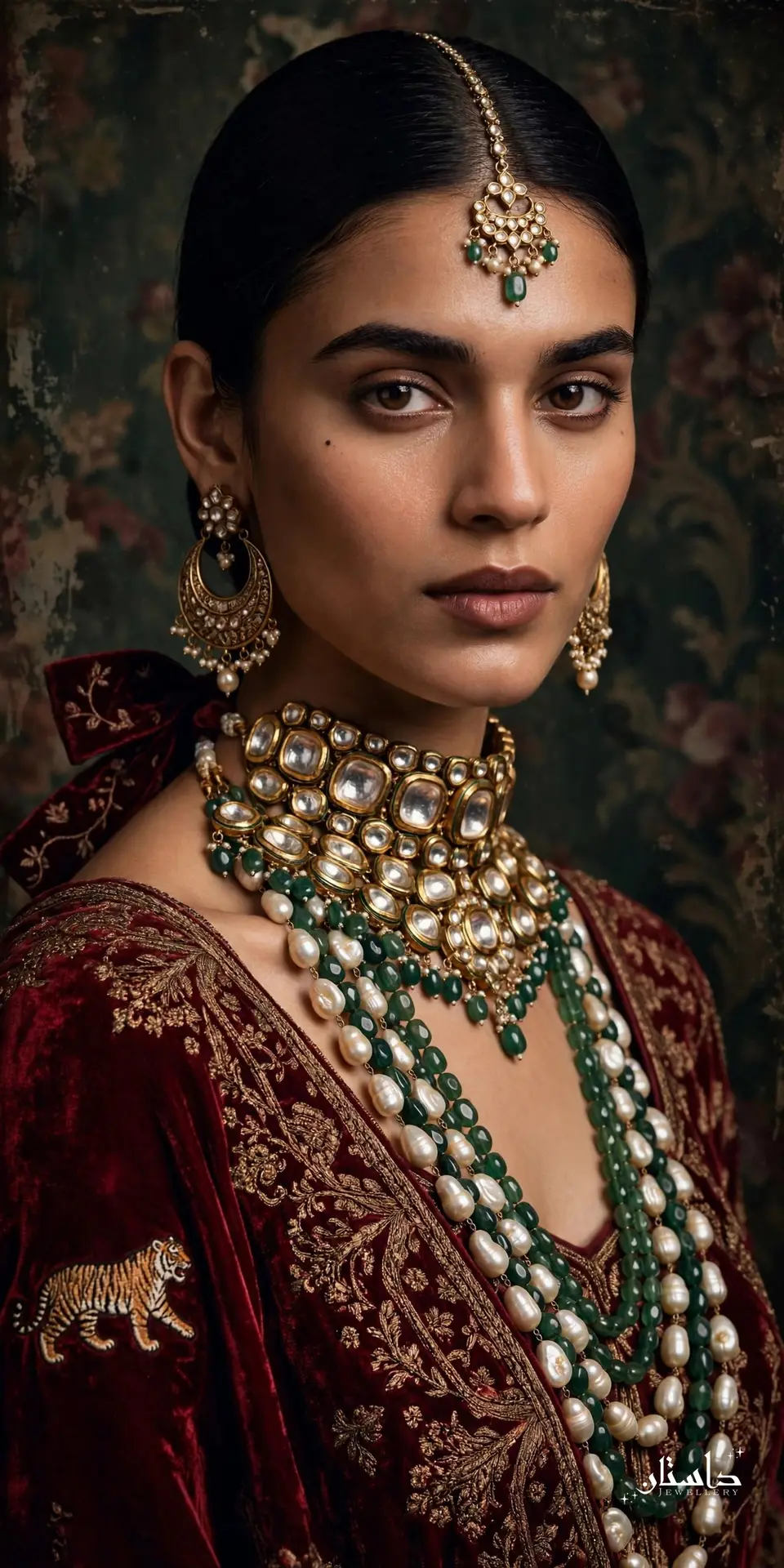
Every festive season in Pakistan, the same search starts: “Sabyasachi wala set kahan se milega?” Women in Lahore, Karachi and Islamabad want the Indian heritage look — heavy kundan, uncut polki, temple motifs, layered necklaces — at a price a Pakistani budget can carry. This guide covers the style, the crafts, the prices, and what Dastaan Jewellery actually makes: earrings, necklace sets, mala sets, pendant sets and karay.
Key takeaways
- Sabyasachi-style is a design language, not a logo: heritage Indian inspired craftsmanship — kundan, polki, uncut stones, meenakari, layered sets.
- Gold has priced most buyers out: 24K gold is at a record Rs 563,862 per tola. Designer pieces give the same look for a fraction.
- Dastaan’s pieces are Indian brand inspired jewellery: inspired by the craft, made in India — never copies.
- Dastaan’s real range is focused: earrings (studs, dangle, festive), necklace sets, mala sets, pendant sets and karay/bangles.
- Match the piece to the occasion: kundan for mehndi, polki for barat, zircon for walima, light sets for nikkah and Eid.
- 11.11 sale: up to 50% off + extra 5% off on bank transfer, ends 30 November 2026. COD across Pakistan.
In this guide
- What “Sabyasachi-style” actually means
- Kundan, polki and the crafts behind the look
- Inspired, not copied — how Dastaan designs its pieces
- What Dastaan actually makes: earrings, sets and karay
- A few Dastaan examples
- Match the piece to the occasion: mehndi, barat, walima, nikkah, Eid
- What should a Sabyasachi-style piece cost in Pakistan?
- How to spot quality in 60 seconds
- How to buy: COD, WhatsApp and the 11.11 sale
- Frequently asked questions
What “Sabyasachi-style” actually means
Sabyasachi Mukherjee built India’s most recognised heritage jewellery brand on one idea: Indian heritage, worn like royalty. His look is five details together.
The five details of the Sabyasachi look
1. Kundan and polki. Glass stones in gold foil (kundan) and uncut stones (polki) — warm and regal, never flashy. 2. Layered necklaces. A choker or ranihaar, a longer mala below it. 3. Temple motifs. Paisleys, peacocks, lotus buds, Mughal arches. 4. Warm, deep colour. Emerald green, ruby red, maroon, ivory pearls. 5. A complete look. A necklace set with matching earrings, and a karay to finish it — one story from neck to wrist.
Why Pakistani women search for it
Both traditions share the same craft roots, so the look feels like home. The original costs lakhs. A Sabyasachi inspired set gives the same look at a price a family can say yes to.
Kundan, polki and the crafts behind the look
Two crafts define the Sabyasachi-style piece — both centuries old, both Indian inspired — and a good designer handles them very differently from a mass-market factory.
Kundan
Kundan is glass stone set in a gold foil base, wrapped in fine gold ribbon — warm and glowing, far more expensive-looking than it is. It loves yellows, greens and oranges, which is why it suits mehndi best. Good kundan has level stones, gap-free foil, a well-finished back.
Polki
Polki uses uncut-look stones in an open, antique finish. Where kundan glows, polki commands: heavier, more royal, made for the barat — even stones, secure settings, a clasp that holds the weight.
Meenakari, pearls and zircon
Meenakari is coloured enamel over metal — the reds, greens and blues of a festive set. Pearls soften a heavy set for nikkah and walima. Zircon (American Diamond) brings the sparkle: precision-cut stones that read like diamonds. A good piece layers crafts — kundan with meenakari, polki with pearls.
Inspired, not copied — how Dastaan designs its pieces
Dastaan Jewellery is an Indian inspired brand: the crafts, motifs and heritage language come from the same tradition Sabyasachi draws on. But Dastaan’s designs are Dastaan’s own — no piece is a copy of another brand’s work. An inspired design starts from the craft and builds something new, giving you the Sabyasachi look you searched for — honestly a Dastaan piece, made for Pakistani occasions, priced in rupees, delivered by COD across Pakistan.
What Dastaan actually makes: earrings, sets and karay
Dastaan’s range is focused: earrings, necklace sets, mala sets, pendant sets and karay — every piece made for festive and family occasions.
Earrings — studs, dangle, festive
Earrings are Dastaan’s biggest range: studs for everyday wear, dangle earrings for festive evenings, and statement festive earrings for the main functions — kundan, polki, meenakari and zircon.
Necklace sets, mala sets and pendant sets
Necklace sets pair a neckpiece with matching earrings. Mala sets layer longer strands for a regal look. Pendant sets keep it lighter — one pendant, one pair of earrings — for Eid days and dinners.
Karay and bangles — including Indian-brand-inspired karay
The karay is where the Indian-brand inspiration shows most clearly: bold, regal bangles in the style of the classic Indian karay. One statement karay can carry a whole outfit.
A few Dastaan examples
The look shows up across Dastaan’s real range. Dangle earrings like Nawabi (https://dastaanjewellery.com/product/nawabi/) carry the regal, court-inspired feel; a mala set like Jahanara (https://dastaanjewellery.com/product/jahanara/) gives the layered-set look; red-teardrop earrings like Gohar (https://dastaanjewellery.com/product/gohar/) keep it wearable for evenings; a karay like Shahi Kangan (https://dastaanjewellery.com/product/shahi-kangan/) brings the Indian-brand-inspired style to the wrist; and the panther-inspired Jungle Jewel (https://dastaanjewellery.com/product/jungle-jewel/) set is the statement option.
Match the piece to the occasion: mehndi, barat, walima, nikkah, Eid
A piece that is perfect for one function can be wrong for the next — plan function by function.
- Mehndi / Mayun — Go colourful. Kundan in warm tones, meenakari greens and oranges.
- Barat — Go heavy. Polki or a full layered kundan set, with the biggest necklace you own.
- Walima / Reception — Go sparkling. Zircon drops, pearl strands, lighter sets.
- Nikkah — Go elegant. A lighter set, pearls, or a single statement necklace.
- Eid and festive days — Go fresh. Light dangle earrings, a pendant set, or a single karay.
- Dholki and sangeet — Go fun. A bold earring like Gohar.
One rule covers all: one statement at a time — let one piece lead and the other support.
What should a Sabyasachi-style piece cost in Pakistan?
At Rs 563,862 per tola, gold jewellery costs lakhs before making charges — which is why designer jewellery is the default festive choice in 2026. Guide ranges:
- Rs 1,500–5,000 — Earrings: studs, dangles and festive pairs in kundan and zircon.
- Rs 3,000–6,000 — Everyday and festive sets: lighter kundan and zircon necklace and pendant sets.
- Rs 6,000–12,000 — Statement sets and mala sets: full necklace sets, heavy kundan and polki work.
- Rs 2,000–8,000 — Karay and bangles: from a single statement karay to stacked sets.
- Rs 12,000+ — Heirloom-style statement pieces: the biggest, most detailed sets.
Price-per-wear beats sticker price: a Rs 10,000 set worn across mehndi, barat, walima and three family functions costs less per wear than a single salon visit. And in the 11.11 sale: up to 50% off, plus an extra 5% off on bank transfer, until 30 November 2026.
How to spot quality in 60 seconds
Before you pay for any “Sabyasachi wala set”, run this 60-second check.
- Stone setting — Press each stone lightly. Nothing should shift or wobble; stones should sit level.
- Finish — Plating should be even, with no dark patches — including the back.
- Weight — A set should feel substantial, not hollow — but earrings over ~15g each will hurt by night’s end.
- Closures — Clasps should click shut firmly; hooks should be smooth, with no sharp ends.
- The back test — Turn the piece over: a rough, unfinished back means corners cut everywhere.
If a seller cannot name the craft, the stones or the plating, walk away. A designer brand names its materials; a copy shop hides behind “premium quality”.
How to buy: COD, WhatsApp and the 11.11 sale
Buying a designer set online should feel safe. Dastaan delivers by Cash on Delivery across Pakistan — you pay when the piece is in your hands. The 11.11 sale runs until 30 November 2026: up to 50% off, plus an extra 5% off on bank transfer. Choosing between two pieces? Message us first — a real person will help you pick.
Chat with Dastaan Jewellery on WhatsApp — +92 322 0043662 (https://wa.me/923220043662)
Frequently asked questions
Is Sabyasachi inspired jewellery the same as original Sabyasachi?
No. Original Sabyasachi is an Indian luxury brand whose pieces cost lakhs. Sabyasachi inspired jewellery takes the same design language — kundan, polki, heritage motifs, layered sets — and makes it in India, at Pakistani prices.
Where can I buy Sabyasachi inspired jewellery in Pakistan?
From designer brands in the Indian inspired craft tradition — online, with COD. Dastaan ships across Pakistan at dastaanjewellery.com; ask on WhatsApp at +92 322 0043662.
What is the best Sabyasachi-style piece for a barat?
A heavy polki or layered kundan set — the barat is the night for the biggest, most regal piece you own. Dangle earrings like Nawabi or a statement set like Jungle Jewel are good examples.
How much does a Sabyasachi inspired set cost in Pakistan?
A good designer set falls between Rs 6,000 and Rs 12,000, with earrings from Rs 1,500 and karay from Rs 2,000 — a fraction of a gold piece at today’s record gold price. 11.11 sale until 30 November 2026: up to 50% off, plus an extra 5% off on bank transfer.
Can I wear a Sabyasachi-style set for mehndi and walima too?
Yes — pick the right one per function. Colourful kundan for mehndi, sparkling zircon or pearls for walima, and keep the heaviest polki set for the barat.